Table Of Content

Type 1 hair tends to become oily quickly, so experts recommend washing type 1 hair once every three days. Hair type can vary slightly across different sections of your scalp. For example, some people might have straight hair near the crown (top of their head) and wavy strands around the hairline. This hair type is particularly fragile, which means dry detangling should be kept to a minimum (if ever). Instead, be patient with your coils and only detangle them gently when your hair has conditioner in it—aka, in the shower before you dry your strands. This hair type is often categorized as a classic corkscrew curl.
Effective Shampoos for Straight Hair that Add Body and Shine
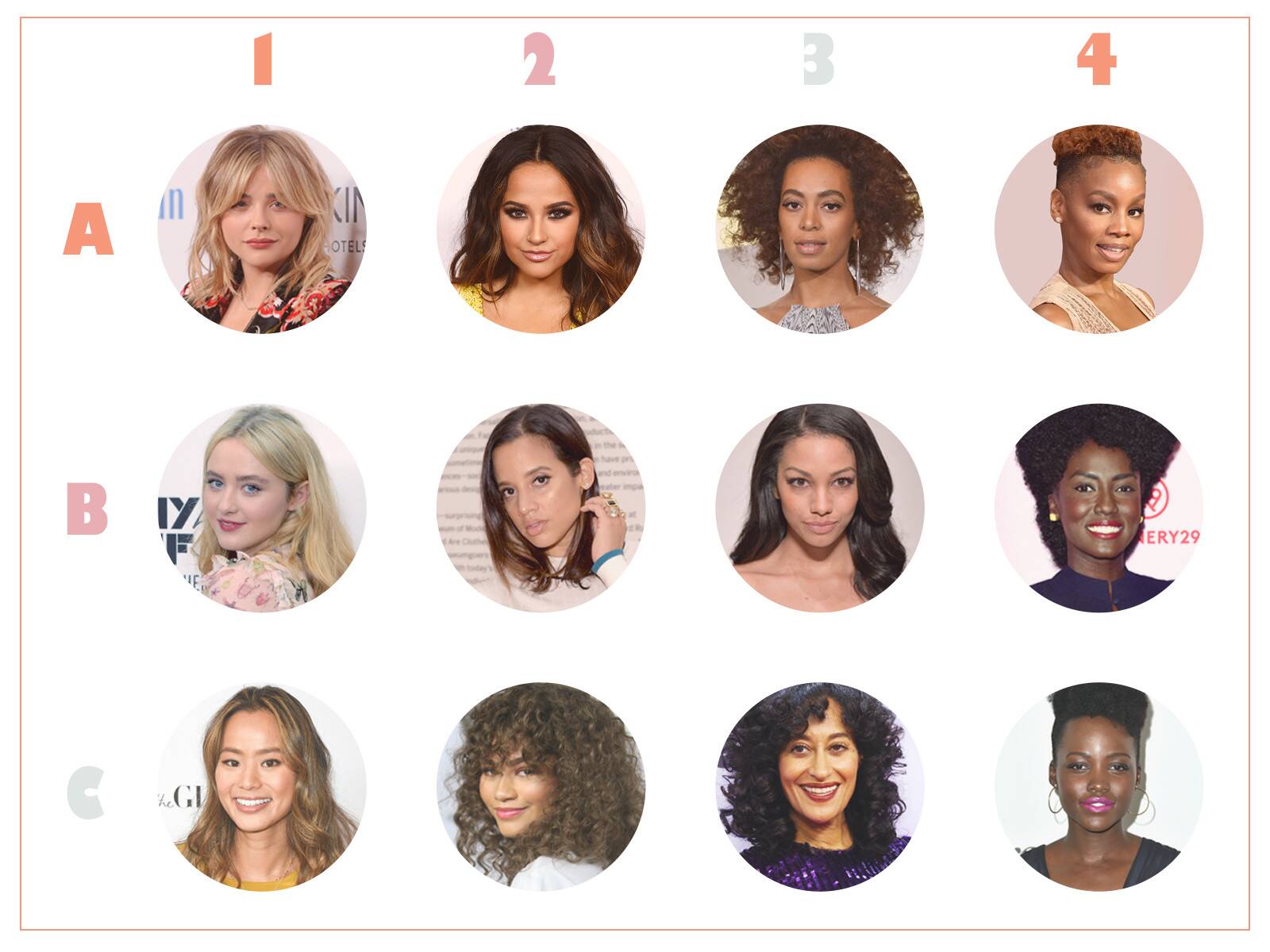
Simply put, hair types are determined by the natural shape or pattern of the strands. In this article, we’ll explain hair types and help you figure out what makes yours different. Every type of hair, from straight to curly, has its own traits and needs that require different care and attention. Key characteristics of Type 4A natural hair are miniature, tightly-coiled strands that still maintain a visible S-shape curl pattern, much like the model above. Then it’s likely you fall into the straight-strand group (a.k.a. Type 1 hair). And if you have baby-fine, straight hair, just like this model does and find your locks can’t hold curls as well, you’ve got 1A hair.
Type 4: Kinky Hair
Thick hair can handle length and layers, which help prevent hair from looking bulky and heavy at the mid-length and ends. For comparison's sake, a piece of copy paper is 70 microns thick. "Fine hair is almost half the thickness of copy paper, and coarse hair has about twice the thickness of copy paper," Spengler says. One quick way to tell if you have thick or thin hair is by pulling a small section of hair to the side, like a part. If you can see through the hair to your scalp underneath, your hair is on the thinner side.
Fresh Short Bob with Bangs Looks to Style Your Blunt Cut
If you’re someone who has multiple textures, choose the one that is most prominent throughout. Depending on the subtype, it can also be very difficult to add texture to the hair, as well. These hair types are prone to getting dirtier and oiler more quickly than other hair types, according to Shelley Gregory, hair stylist and colorist at Atelier Salon in Las Vegas. Because it can often get weighed down more easily, more lightweight hair care and hair styling products are a type 1’s best friend. Hair typing is a real and widely used system in the hair care industry. It is used as a tool to categorize and describe the different textures and types of hair, such as straight, wavy, curly, and coily.
What Is Triple Hair Washing, and Should You Be Doing It? Here's What Pros Think - Glamour
What Is Triple Hair Washing, and Should You Be Doing It? Here's What Pros Think.
Posted: Wed, 24 Apr 2024 16:15:34 GMT [source]
It's a great option for those who feel like their color has faded, especially blondes who like to be on the cooler side, Allen says. She'd also suggest a translucent color glaze to clients who want to subtly enhance their current hue without committing to a permanent change. Her work has been featured in Allure, Elle, InStyle, Well + Good, and more.
Categories
Low porosity hair types, on the other hand, are those where the cuticle lays flat blocking water or moisture from being absorbed into the strands. For these hair types, the biggest concern is typically product buildup, especially with thick hair oils and mousses. That’s why it’s recommended you apply products while your hair is still damp to help ensure they’re more easily absorbed and distributed.
If you want more curl definition, try to twirl tiny sections of curls around your finger when your hair is damp. “The struggle with Type 2 curls is longevity, so I always recommend diffusing for maximum volume and hold for curls that tend to flatten throughout the day,” says Matais-Bernard. We love the Curlsmith Defrizzion Travel Hair Dryer & Diffuser because it’s great at reducing frizz and big enough for even the fullest head of curls. “There are many myths around hair and hair loss,” Farjo says.
Some view it as limiting and choose not to use it, while others find it useful. The choice to use hair typing is personal and depends on individual preferences. The reality is that many women don’t fit perfectly into one category and subclassification. It’s common to have a combination of hair types (or different types of curls) on your head. For example, your hair pattern may be an “OS” LOIS hair type. In this example, your hair would contain primarily a combination of “O” shaped spiral curls and “S” shaped curly waves with defined hills and valleys.
Crimped Hair: 3 Easy Ways to Get The Look
Since you want to preserve your curls but you don't want to wash them daily, try "pineappling" before bed. This simply means that you're putting your hair into a high bun (think a top knot but not so tight). Unlike type 1 and 2a hair, those with type 2b strands should probably skip the brush detangling method and opt for a wide-toothed comb instead.
The right product for your hair means the difference between insta-worthy locks or a bad hair day. Daily Dose™ Clean Moisture Leave-In Conditioner is a lightweight, cruelty-free product specially formulated to bring out the best in all hair types. Daily Dose is free of sulfates and parabens, so it won’t dry out your hair or cause buildup.
Chances are you’re not as in tune with your hair type as you thought. And yet, figuring out your correct hair type may be easier said than done. When trying out different hairstyles, people with straight hair often face problems that people with curly hair don’t have.


No comments:
Post a Comment